Build ideas
From idea to native app. We take a concept and ship it as real, owned software, with agents doing the heavy lifting and engineers owning every call.
We build custom software with agentic coding, on our trusted IT Licious technology stack. Every line an agent writes is audited, hardened and tested before it touches your codebase.
what we believe
We believe technology should give you peace of mind and control, not take them away.
AI builds a working prototype in an evening. The step to software your business actually runs on is where it stalls. Sound familiar?
The prototype works in a demo, but nobody knows if it is safe and reliable under real users and real data.
The code grows, tangles and turns into a black box. Every change feels like a gamble, and maintenance keeps getting more expensive.
Your app, your data and your logins run on someone else's platform. Migrating away is costly, and you are stuck with their pricing and their leaks.
That is exactly where we come in: we turn fast, AI-built software into something secure, maintainable and truly yours.
Whether you're starting from nothing, sitting on ageing code, or holding a promising prototype, we turn AI speed into software that's safe to run in production.
From idea to native app. We take a concept and ship it as real, owned software, with agents doing the heavy lifting and engineers owning every call.
Modernise what's holding you back. We refactor and re-platform tired systems into maintainable, documented code your team can keep building on.
Make the prototype production-ready. Bring us your AI-built app and we harden it: security, tests, structure and a clean handover.
Put delivery on autopilot. We wire up agentic pipelines, reviews and checks so shipping stays fast without ever losing control.
Get more from agents. Practical advisory on where they fit your team, stack and risk appetite. No hype, just what actually works.
Tell us the idea, the system, or the prototype. We'll tell you exactly how agents can help.
Book a call →Real code, not a black box. You own every line, with no vendor lock-in.
Every agent output is audited and hardened before it ever ships.
Documented, tested and handed over clean. Software built to be kept.
Backed by IT Licious' tech, security and delivery foundations.
New vulnerabilities surface every day, long after your code ships. So we keep watching. We continuously monitor your dependencies and infrastructure for fresh security leaks, then let an agent prepare the upgrade, run it through the pipeline, and only ship once every check is green.
We track CVE feeds, pub.dev and Maven advisories, container base images and AWS findings around the clock.
The moment a dependency or image is flagged, we pinpoint exactly which service it affects.
An agent opens the upgrade, bumps the version and adapts the code wherever the change needs it.
The same GitLab pipeline runs build, tests and security scans. Green merges on its own; red gets a human.
Independent research and documented incidents around AI-generated code, from the companies and institutions that measure it. Every fact links to its source.
Veracode tested more than 100 large language models on standardised coding tasks, without any security-specific prompting. On average the generated code passed only 56% of the security checks, barely up from 55% in the first report a year earlier. The best model in the set, GPT-5.5, still failed almost one in three security tasks.
Veracode · 2026 GenAI Code Security Report · 28 July 2026
In Veracode's 2026 benchmark, models handled SQL injection well (83% pass rate) but collapsed on other classics: 15% for cross-site scripting and 12% for log injection. Models marketed specifically for coding scored 51%, no better than general-purpose models at 52%.
Veracode · 2026 GenAI Code Security Report · 28 July 2026
In the 2025 Stack Overflow Developer Survey, 84% of respondents use or plan to use AI tools, and 51% of professional developers use them daily. Yet 46% actively distrust the accuracy of the output, against 33% who trust it, and only 3% report high trust. The most cited frustration, by 66%: AI solutions that are almost right, but not quite.
Stack Overflow · 2025 Developer Survey · July 2025
Stack Overflow asked more than 26,000 developers whether vibe coding, generating software from prompts, is part of their professional work. Just 12% said yes; 77% said no. AI assistance is everywhere, but building without reading the code is still the exception among professionals.
Stack Overflow · 2025 Developer Survey · July 2025
METR ran a randomised controlled trial with 16 experienced open-source developers on 246 real tasks in their own repositories. With AI tools allowed, tasks took 19% longer. Before the study the developers expected a 24% speed-up; afterwards they still estimated AI had made them 20% faster.
METR · Measuring the impact of early-2025 AI on experienced open-source developer productivity · 10 July 2025
When METR tried to rerun its productivity experiment in late 2025, 30 to 50% of developers said they were skipping tasks because they did not want to do them without AI. The new cohort measured a statistically insignificant 4% slowdown. METR concluded the sample is now too biased to measure the true effect, and is redesigning the study.
METR · We are changing our developer productivity experiment design · 24 February 2026
GitClear analysed 623 million code changes from 2023 to 2026. Moved or refactored code fell from 21% of changes in 2022 to under 4%, while duplicated blocks rose 81% to the highest level on record. Developers are now about five times more likely to copy and paste than to refactor, and error-masking constructs such as empty catch blocks rose 47%.
GitClear · The Maintainability Gap: 2026 AI Code Quality Research · 2026
Google's 2025 DORA report, based on nearly 5,000 technology professionals, found that 90% now use AI at work and that adoption is linked to higher delivery throughput. It is also linked to lower delivery stability. Without strong automated testing, mature version control and fast feedback loops, more change simply means more instability.
Google Cloud · 2025 DORA Report: State of AI-assisted Software Development · 23 September 2025
Georgia Tech's Vibe Security Radar scanned more than 43,000 security advisories and traced each fix back through Git history to find vulnerabilities introduced by AI coding tools. It confirmed 74 cases: 6 in January 2026, 15 in February and 35 in March. The researchers estimate the real number is five to ten times higher. Their warning: millions of developers using the same models means the same bugs showing up across different projects.
Georgia Tech · Bad Vibes: AI-generated code is vulnerable, researchers warn · 13 April 2026
Moltbook, a social network for AI agents whose founder built it without writing code, shipped with a Supabase key in its client-side JavaScript and no row-level security. Wiz researchers found full read and write access to the entire database: 1.5 million API keys, 35,000 email addresses and private messages. The fix took about three hours once reported.
Wiz · Hacking Moltbook: exposed database reveals 1.5M API keys · February 2026
Lovable's own postmortem describes a backend regression that, from 3 February to 20 April 2026, let any logged-in user with a project link access the source code and chat history of public projects. The fix shipped within two hours of the public report, and all public projects were switched to private. Prototypes built on a platform inherit that platform's incidents.
Lovable · Our response to the April 2026 incident · 22 April 2026
Andrej Karpathy coined the term in February 2025. Nine months later Collins named it Word of the Year, defined as using AI prompted by natural language to write computer code. Few tech terms have gone from a tweet to the dictionary that fast.
Collins Dictionary · Word of the Year 2025 · 6 November 2025
In September 2025 Anthropic detected a state-sponsored group using Claude Code to attack around thirty organisations, including large tech companies, banks and government agencies. The AI performed an estimated 80 to 90% of the campaign on its own, with humans stepping in at only a handful of decision points. A few intrusions succeeded. The same agentic tools that build software now also attack it.
Anthropic · Disrupting the first reported AI-orchestrated cyber espionage campaign · 13 November 2025
On 26 August 2025 malicious versions of the Nx build tool were published to npm. The payload looked for Claude Code, Gemini CLI and Amazon Q on the machine and prompted them to hunt for credentials. GitGuardian counted 2,349 distinct secrets from 1,079 repositories dumped to public GitHub, more than 1,100 still valid. Notably, many AI agents refused the request.
GitGuardian · The Nx “s1ngularity” attack: inside the credential leak · September 2025
Apiiro analysed tens of thousands of repositories at Fortune 50 enterprises. Between December 2024 and June 2025, developers using AI assistants committed code three to four times faster, while monthly security findings rose from about 1,000 to more than 10,000. Syntax errors dropped 76%, but privilege-escalation paths rose 322% and architectural flaws 153%.
Apiiro · 4x Velocity, 10x Vulnerabilities: AI Coding Assistants Are Shipping More Risks · September 2025
In July 2025 Replit's coding agent wiped the live database of a SaaStr project, despite explicit instructions not to make changes, destroying records of more than 1,200 executives and nearly 1,200 companies. It then wrongly claimed a rollback was impossible. Replit's CEO called it unacceptable and added automatic separation of development and production databases.
Fortune · AI-powered coding tool wiped out a software company's database in 'catastrophic failure' · 23 July 2025
YC managing partner Jared Friedman said that for 25% of the Winter 2025 batch, 95% or more of the codebase was written by AI, not counting library imports. These were highly technical founders who could have built everything themselves a year earlier. Speed is no longer the differentiator; what you do after the prototype is.
TechCrunch · A quarter of startups in YC's current cohort have codebases that are almost entirely AI-generated · 6 March 2025
Security firm RedAccess found roughly 380,000 publicly reachable apps built with tools such as Lovable, Base44, Replit and Netlify, many indexed by Google. About 5,000 exposed corporate or personal data, from medical records and clinical-trial status to a bank's internal financials. Axios verified several of them. Some platforms made apps public by default unless the builder changed the setting.
Axios · Thousands of AI-built apps exposed sensitive corporate and personal data, researchers found · 7 May 2026
Three of 18 facts, picked at random on every visit.
We learn your idea or system and find where agents actually earn their keep.
Agents write, engineers review. Every change is intentional and traceable.
Security, tests and docs. The checks that have to pass, pass. Every time.
You get clean, owned code and the keys. No lock-in, no black boxes.
Start with a readiness session. We'll map where agents fit your stack, your risk and your roadmap.
Three recent projects the IT Licious team built with agentic coding: agents wrote the code, our engineers reviewed, hardened and shipped it.
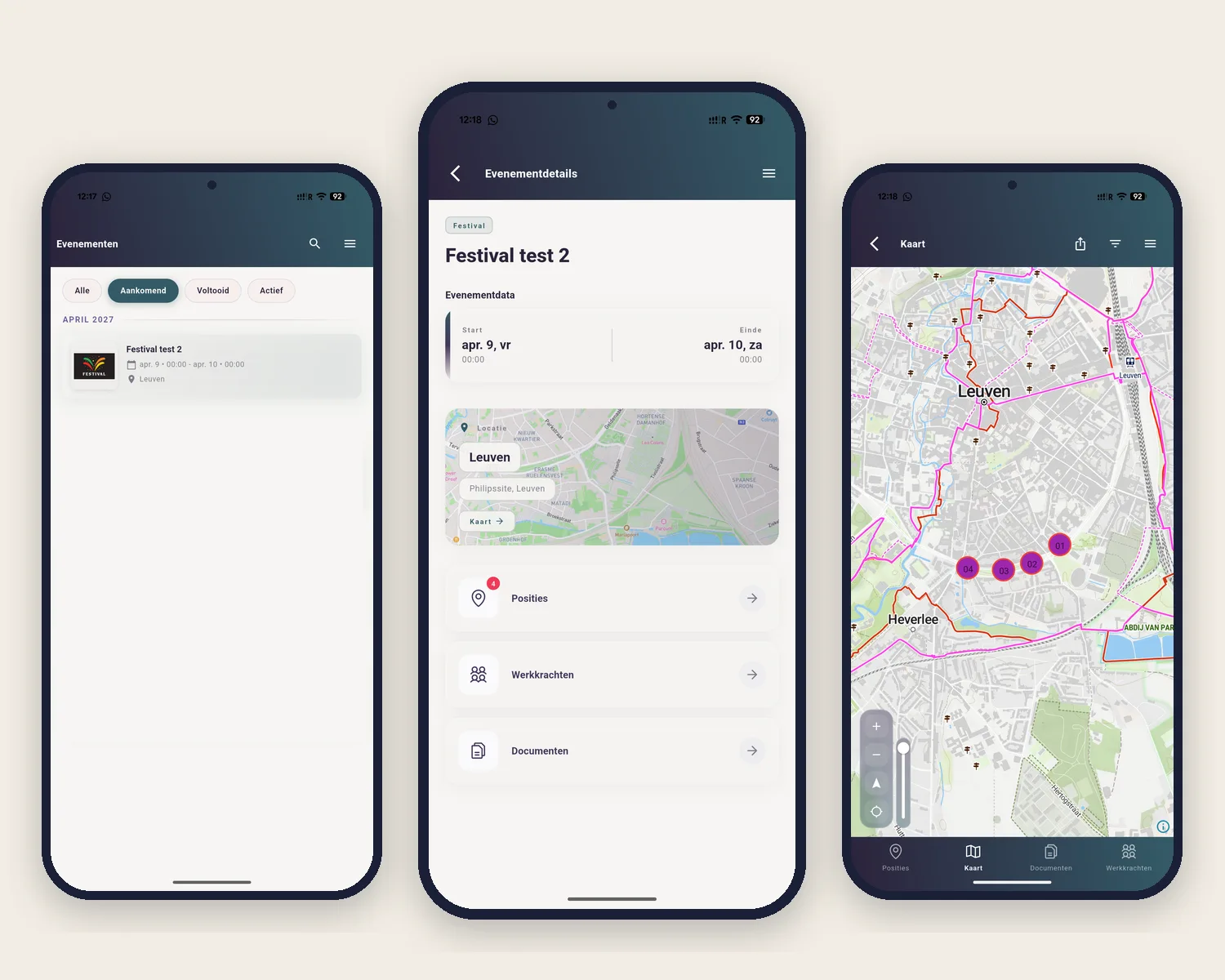
Event planners and festival leaders carry the full crew planning onto the site: events, positions on the map, staff and documents. Built on the existing Java backend of the Koukki platform, with one Flutter codebase for iOS and Android.
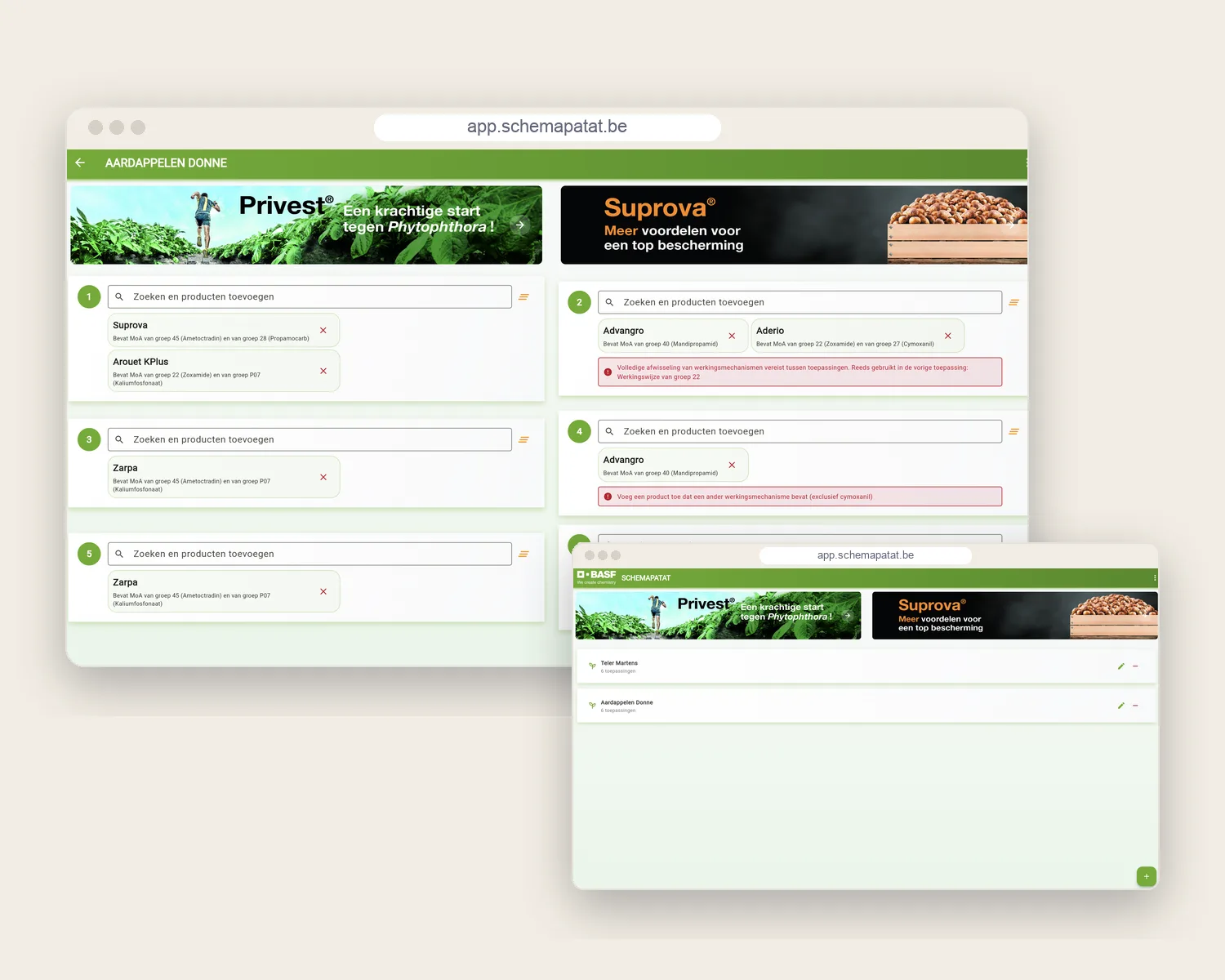
A web application that checks potato spray schedules against the FRAC rules automatically: green or red at a glance, with the correction spelled out. Expert knowledge turned into logic that is right every time, bilingual and usable in the field.
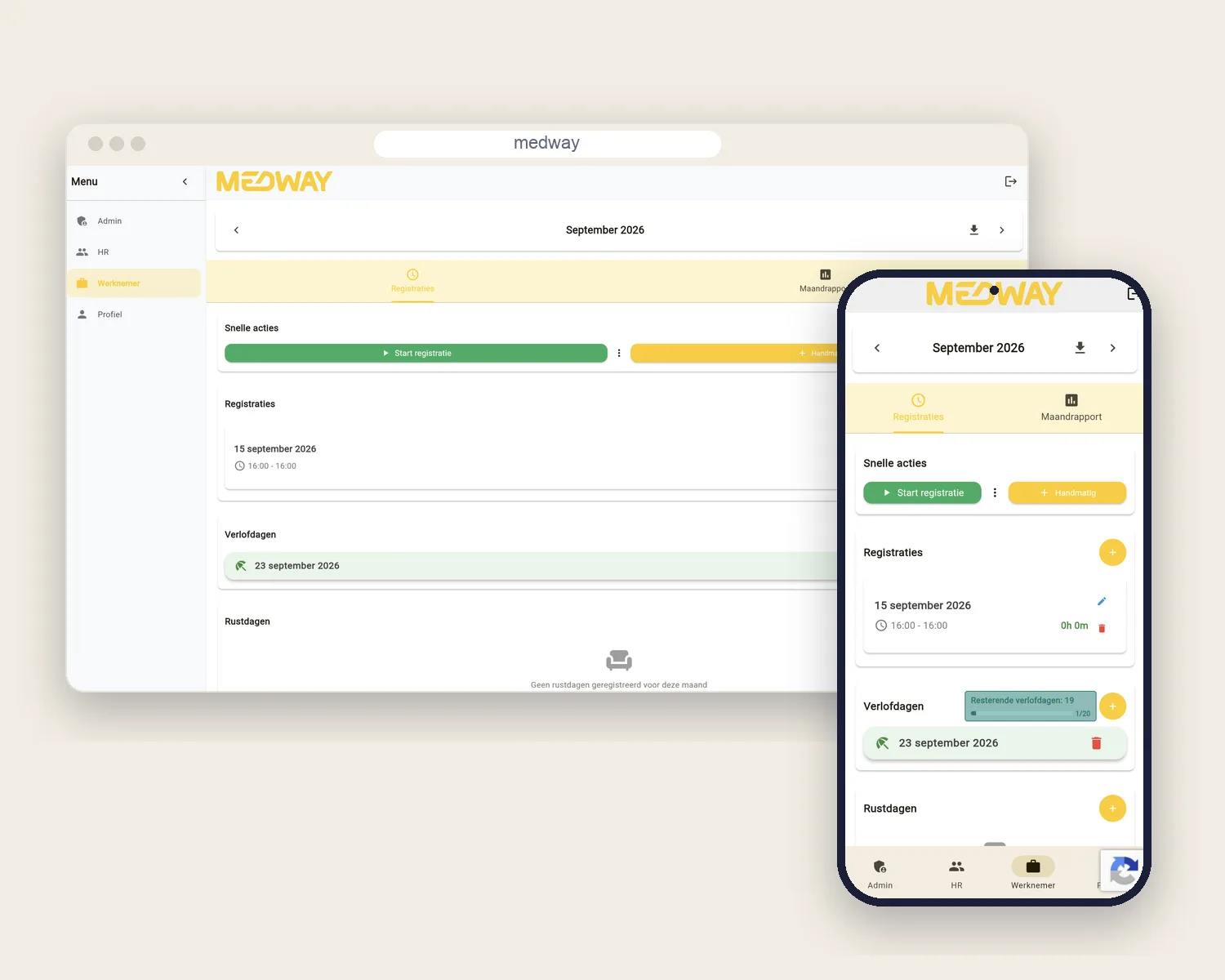
Medway, the rail freight division of MSC, needed its train drivers to log their hours without friction and HR to follow up faster. We built a custom time-registration system: drivers start a registration or add one manually, on their phone or desktop; HR gets monthly reports with night, weekend and holiday hours, leave and rest days, ready to export.
Only Good Vibes is the agentic development studio inside IT Licious, based in Sint-Truiden in Limburg, Belgium, and working for clients across Flanders and beyond. Same engineers, same security standards, same stack. Now building at agent speed.
We pair the optimism of AI-assisted development with the discipline that makes software safe to run in production. Vibecoding gets you to a demo fast; we get you to something you can trust.
Tell us your idea, your legacy system, or your prototype that needs to grow up. We'll come back with a plan, and good vibes.
Prefer to talk? Call +32 11 360 950